
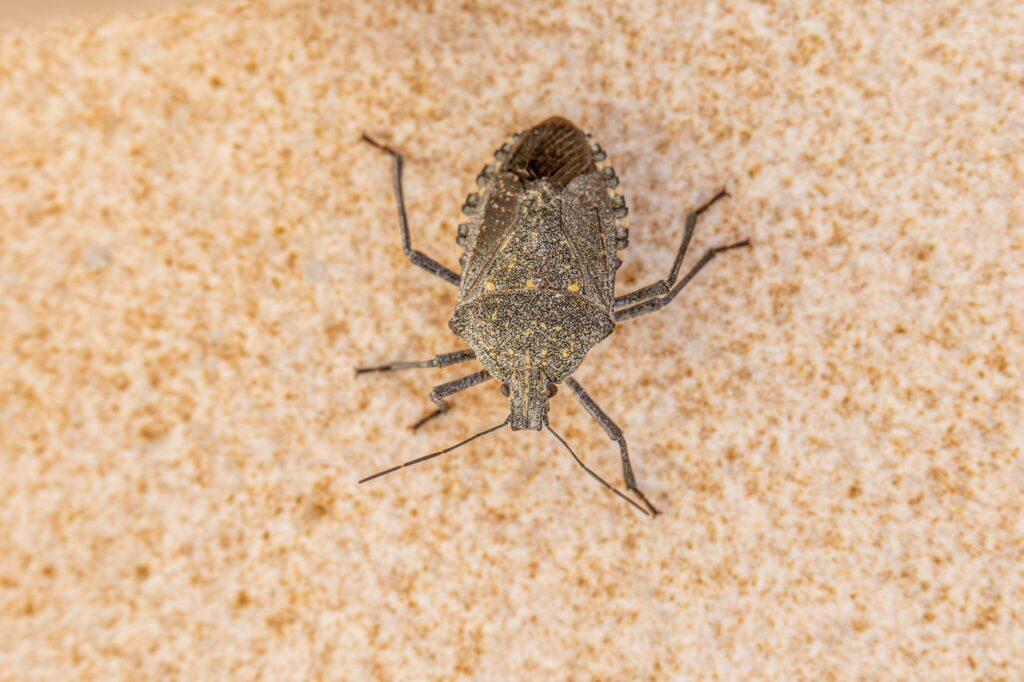
As temperatures begin cooling across Dublin, Ohio, many homeowners start noticing stink bugs gathering around windows, siding, doors, garages, and attic spaces. These pests are not trying to damage your home or breed indoors. They are searching for sheltered places to spend the winter.
Brown marmorated stink bugs become especially active during early fall as shorter days and cooler temperatures push them toward protected spaces. Once they find gaps around your home, they can settle inside walls, attics, storage areas, and window frames where they may remain hidden until warmer days return.
Key Takeaways About Fall Stink Bug Activity
When stink bugs move indoors
Brown marmorated stink bugs gather on sunny walls and push inside in early fall, then overwinter in walls and attics. Bigger leaves mean heavier activity.
- Brown marmorated stink bugs move indoors during fall while searching for protected overwintering spaces.
- Homes in Dublin often attract stink bugs through gaps around windows, siding, doors, vents, and utility openings.
- Stink bugs do not reproduce indoors or damage structures, but large numbers can become a recurring nuisance through winter.
- Sealing entry points and improving exclusion work can help reduce indoor stink bug activity.
How to Identify Stink Bugs Around Your Home
Brown marmorated stink bugs are the species most homeowners notice during fall in Central Ohio. Adults are shield-shaped insects with a mottled brown appearance and a noticeable odor released when disturbed or crushed.
During late summer and early fall, these pests begin gathering on sunny exterior walls, around windows, near rooflines, and along siding as they search for overwintering locations. Homeowners often first notice them during warmer afternoons when large numbers collect on the outside of the home.
Where Stink Bugs Usually Gather Indoors
Once inside, stink bugs tend to gather near windows, attics, storage spaces, wall voids, baseboards, and upper-level rooms that stay warm during winter. Some may remain hidden for weeks before becoming active again during sunny days.
Homeowners frequently find them near window trim, behind curtains, around light fixtures, or near attic access points. The EPA explains that brown marmorated stink bugs commonly gather near entry points and sheltered indoor spaces after moving inside during fall.
Outdoor Areas That Attract Stink Bugs
During summer, stink bugs feed outdoors on fruits, vegetables, ornamental plants, and other vegetation. Properties with gardens, landscaping, trees, or fruit-bearing plants may support larger seasonal populations before temperatures begin dropping.
Exterior walls that receive long periods of afternoon sunlight can also attract stink bugs during fall. Warm siding, garage doors, rooflines, and upper-story windows often become gathering areas before the pests move indoors.
Common Entry Points Around Dublin Homes
Stink bugs commonly enter through gaps around windows, siding, doors, soffits, rooflines, vents, utility penetrations, and attic openings. Older weatherstripping, damaged screens, and loose trim can create easy access points.
Gable vents and upper-story openings are especially common problem areas because warm air escaping from the home can attract overwintering pests. Small structural gaps may allow large numbers of stink bugs to enter over the course of the season.
Why Stink Bugs Move Indoors During Fall
Brown marmorated stink bugs are cold-sensitive insects that survive winter by hiding in protected spaces. In nature, they often overwinter beneath bark, inside dead trees, or within sheltered crevices. Homes provide similar protection once outdoor temperatures begin falling.
Dublin homeowners typically notice this movement beginning in early fall and continuing into colder weather. Sunny afternoons may temporarily increase activity as the pests gather on exterior walls before slipping into hidden openings.
What Attracts Stink Bugs to Homes
Warmth and shelter are the primary reasons stink bugs enter homes. Unlike ants or cockroaches, they are not searching for pantry food or indoor moisture sources. Instead, they are looking for quiet, protected spaces where they can remain inactive through winter.
Homes with sun-facing walls, attic warmth, gaps around siding, or loose exterior materials may attract larger numbers of overwintering pests. The University of Georgia notes that homes often become overwintering sites during seasonal movement.
How Stink Bugs Stay Hidden Indoors
After entering a home, stink bugs often settle into wall voids, attic spaces, storage rooms, and gaps near trim or insulation. Many remain inactive through colder periods and only become visible again during warmer winter days.
Homeowners may suddenly notice them near windows or ceilings during sunny weather because rising indoor temperatures trigger movement. Even small entry points can support recurring activity once pests settle into hidden areas.
Why Fall Exclusion Matters
Exclusion work is one of the most direct ways to reduce indoor stink bug activity because it focuses on blocking the gaps pests use to enter. Sealing openings before temperatures drop can help prevent larger indoor gatherings later in the season.
Checking screens, siding gaps, vents, weatherstripping, and attic openings during late summer and early fall gives homeowners a stronger chance of reducing seasonal entry before overwintering activity peaks.
Problems Stink Bugs Can Cause Indoors
Stink bugs are considered nuisance pests because they do not bite people, reproduce indoors, or damage structural wood. The main issue is the number of pests that can gather inside homes throughout fall and winter.
When disturbed or crushed, stink bugs release a strong odor that many homeowners find unpleasant. Repeated indoor sightings can also become frustrating when pests appear throughout living areas during colder months.
Why Homeowners Find Them Frustrating
Large numbers of stink bugs may gather around windows, ceilings, attics, curtains, storage areas, and upper-level rooms. Even after removing visible pests, additional bugs may emerge from hidden wall voids or attic spaces later.
Vacuuming or crushing them can spread odor through the home. Many homeowners instead remove them using containers of soapy water or physical removal methods that avoid releasing the smell indoors.
Do Stink Bugs Damage Homes?
Stink bugs do not damage drywall, insulation, wiring, furniture, or structural wood inside homes. They also do not reproduce indoors during winter. The EPA notes that brown marmorated stink bugs are primarily nuisance pests inside structures.
Outdoors, however, these pests can damage fruits, vegetables, and ornamental plants during the growing season. Gardeners and homeowners with landscaping may notice increased activity during late summer before fall migration begins.
When Indoor Activity Becomes a Larger Issue
Finding a few stink bugs indoors during fall is common in Dublin and surrounding Central Ohio communities. Larger numbers gathering across multiple rooms, attic areas, or upper-story windows usually point to active entry points around the structure.
Recurring seasonal activity often means exclusion gaps were never fully sealed. Homes with repeated fall infestations may benefit from a more detailed inspection focused on siding, vents, windows, rooflines, and attic access areas.
How Pest Control Helps Reduce Stink Bug Activity
Managing stink bugs usually starts with inspection and exclusion rather than heavy indoor treatment. The goal is to identify where pests are entering and reduce the openings attracting overwintering activity.
Green Shield Pest Pros uses an Integrated Pest Management approach that focuses on inspection, exclusion recommendations, monitoring, and targeted treatments where needed. This allows homeowners to reduce seasonal pest pressure while limiting unnecessary product use.
What Technicians Look for During Inspection
Technicians inspect siding gaps, windows, vents, rooflines, weatherstripping, soffits, utility penetrations, attic openings, and exterior trim for potential entry points. They also look for warm exterior surfaces where stink bugs commonly gather during fall afternoons.
Attic vents and upper-story gaps often receive special attention because these areas can allow pests to settle deeper into the structure before homeowners notice activity indoors.
What Stink Bug Prevention Plans May Include
Service plans may include exclusion recommendations, monitoring, targeted exterior applications, and seasonal inspections focused on recurring entry points. Improving screen condition, sealing gaps, and reducing access around vents and trim can all help reduce future activity.
The Purdue Extension guide on stink bug exclusion recommends keeping screens flush and maintaining tight seals around exterior openings to help prevent indoor movement during fall.
How Homeowners Can Help Reduce Activity
Homeowners can reduce seasonal stink bug activity by repairing damaged screens, sealing gaps around siding and windows, replacing worn weatherstripping, and checking attic vents before cooler weather arrives.
Reducing exterior clutter and maintaining landscaping near the structure may also help lower areas where pests gather before moving indoors. Early preparation during late summer and early fall usually gives homeowners better control over seasonal activity.
Reducing Fall Stink Bug Problems in Dublin Homes
Stink bugs move into Dublin homes during fall because cooler temperatures trigger their search for protected overwintering spaces. Windows, siding gaps, attic vents, rooflines, and doors often become the access points they use most.
Green Shield Pest Pros helps homeowners across Dublin and surrounding Central Ohio communities reduce seasonal pest activity with eco-friendly pest control services and Integrated Pest Management strategies. Visit Green Shield Pest Pros or schedule an inspection to learn more about protecting your home during stink bug season.
Frequently Asked Questions About Stink Bugs
Why Do Stink Bugs Release an Odor?
Brown marmorated stink bugs release odor as a defense mechanism when disturbed or crushed. This smell can linger indoors, which is why many homeowners avoid vacuuming or crushing them directly.
Are Stink Bugs Dangerous to People or Pets?
Stink bugs are nuisance pests and are not known for biting people or damaging structures indoors. Their main impact comes from the number of pests that may gather inside homes during fall and winter.
When Should I Prepare My Home for Stink Bugs?
Preparation usually starts in late summer or early fall before temperatures begin dropping. Sealing gaps and checking exterior openings early gives homeowners more time to reduce entry before stink bug movement increases.
Can I Handle Stink Bug Problems on My Own?
Basic exclusion work and physical removal can help reduce smaller problems. Homes experiencing repeated seasonal activity or large indoor gatherings may benefit from a more detailed inspection and prevention plan.
Our Methodology: How We Research Pest Control Topics
Every Green Shield Pest Pros article follows the same standard we hold our service work to: clear, accurate, and grounded in what actually works on a real central Ohio home. Homeowners across Columbus, Dublin, New Albany, and the surrounding communities count on us for honest pest information they can act on, and we treat the writing the same way.
We build our content from a combination of government guidance, peer-reviewed research, and the patterns our technicians see across thousands of homes in our 70+ zip-code service area. Here is how we approach each article:
Studying pest behavior
We start with how each pest actually lives — where it nests, how it spreads, and what conditions support it. Central Ohio’s seasonal cycles change pest pressure across the year, and understanding pest biology is what tells us when and how to treat.
Reviewing health and home risks
We review research on how each pest affects human health and home structures. Some pests trigger allergies. Others cause structural damage or carry bacteria. Knowing the actual risk helps homeowners decide how urgently to act.
Using Integrated Pest Management
Our recommendations are grounded in Integrated Pest Management (IPM), the framework supported by the USDA and EPA. IPM combines monitoring, sanitation, exclusion, and targeted treatment to reduce pest populations while limiting unnecessary product use. It is also why our standard service uses eco-friendly, pet-friendly products where they are effective for the job.
Prioritizing prevention and lasting protection
A pest problem rarely ends with one treatment. We focus on the conditions that allow infestations to start in the first place — moisture, food sources, gaps around the home, harborage zones — because long-term control depends on changing those conditions, not just treating the symptoms.
Citing peer-reviewed and government sources
Whenever possible, we support our recommendations with peer-reviewed studies, university extension research, and guidance from agencies like the EPA, CDC, and USDA. Each source we cite is listed at the end of the article.
Why trust us
Green Shield Pest Pros serves homeowners across Dublin, New Albany, Powell, Hilliard, Worthington, Westerville, and 70+ zip codes across central Ohio. We are NPMA certified, a Google Local Services Award recipient, and our service plans start at $49 per month with a free re-treatment guarantee — because we stand behind our work.
That same standard runs through our content. The information you read here reflects what our technicians see in the field, what current research supports, and what we have learned from servicing thousands of central Ohio homes. We focus on the proactive homeowners who invest in their property — and we write the same way we treat: deliberately, with the long-term in mind.
Our credentials
- National Pest Management Association (NPMA) certified
- Google Local Services Award recipient
- Service across Dublin, New Albany, Powell, Hilliard, Worthington, Westerville, and 70+ central Ohio zip codes
- Integrated Pest Management approach with eco-friendly, pet-friendly products
- Plans starting at $49 per month with free re-treatment guarantee
- Trained technicians experienced in central Ohio pest pressure
Sources and standards we reference
To keep our content accurate and up to date, we rely on established research and authority sources, including:
Environmental Protection Agency (EPA):
Guidelines on product use, labeling, and approved applications.
Centers for Disease Control and Prevention (CDC):
Public-health guidance on pests that affect human health, including mosquitoes, ticks, rodents, and bed bugs.
United States Department of Agriculture (USDA):
Integrated Pest Management standards and pest biology research.
National Pest Management Association (NPMA):
Industry standards, pest behavior research, and seasonal trend reporting.
Ohio State University Extension:
Peer-reviewed, region-specific research on central Ohio pest biology and control methods.
Peer-reviewed journals:
Research published in entomology, public health, and environmental science journals to support specific claims about pest behavior, health risks, and treatment efficacy.
Article sources
The following sources were specifically referenced in the research and development of this article:
All information is accurate at the time of publication and is reviewed regularly to reflect current research and pest control standards.