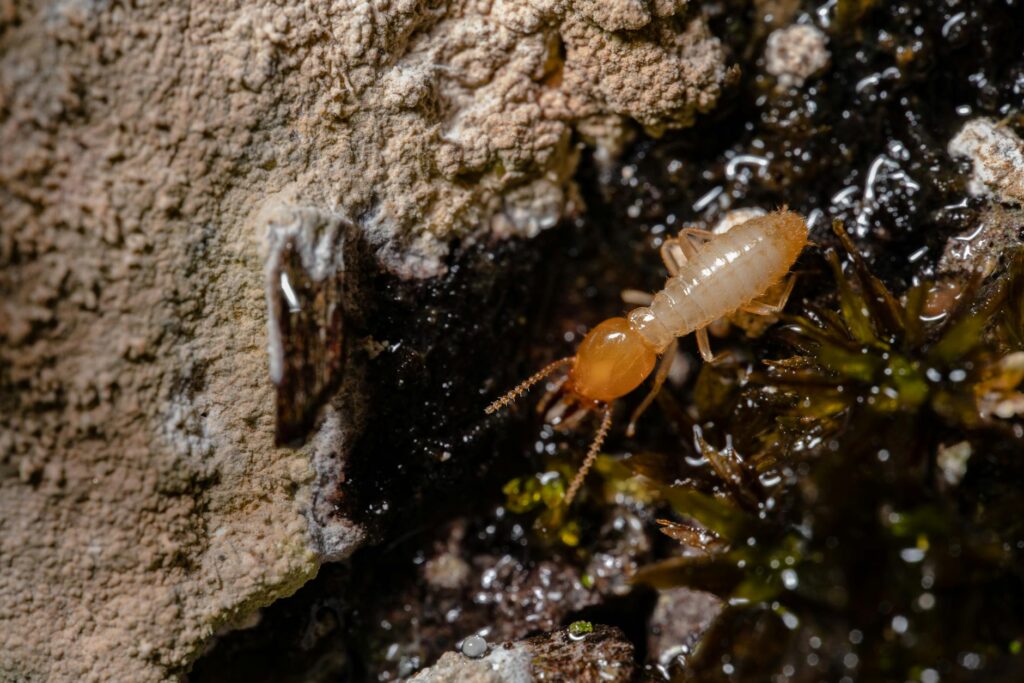
Termites in Ohio can create costly problems when early signs are missed. Learn what to look for, why it matters, and when to call Green Shield Pest Pros.
Key Takeaways About Termites in Ohio
Season · Termite swarmsOhio
When termites swarm in Ohio
This tracks when subterranean termite swarmers appear above ground, not year-round underground feeding. Bigger leaves mean heavier swarm activity.
Swarm peak: May
Peak MayHigh AprLow Jan–Mar, JunOff Jul–Dec
Green Shield Pest Pros tracks Central Ohio pest seasons so eco-conscious treatment lands before activity builds. A professional inspection confirms what is really there.
Eastern subterranean termites are the most common species Ohio homeowners should be aware of, and they can feed on wood within a structure over time.
Knowing what to look for, including the two primary types you may encounter — workers and swarmers — helps you catch termite activity before damage progresses.
Green Shield Pest Pros uses the Sentricon inground baiting system to target colonies, with termite prevention plans available starting at $74 per month alongside general pest control.
Every home without preventative termite control measures may eventually face termite activity, making routine inspections and proactive protection worth considering.
How to Identify Eastern Subterranean Termites in Ohio
Knowing what to look for is the first step toward catching termite activity early. Green Shield Pest Pros controls eastern subterranean termites, the common species Ohio homeowners should watch for. Below are the signs, patterns, and locations that help you tell termite activity apart from other wood-damaging pests.
How to Tell Eastern Subterranean Termite Types Apart in Ohio
Subterranean termites feed along the grain of the wood, targeting the softer springwood while leaving the harder summerwood intact. This creates a layered, almost honeycomb-like damage pattern inside tunnels within the wood. According to UC IPM, this distinctive pattern alone can often distinguish subterranean termite activity from that of other species.
Eastern subterranean termites typically begin swarming as early as January and are mostly finished by early June, according to university entomology research. They swarm during the day, often in the morning or early afternoon, and are not attracted to lights. If you notice winged insects fitting that description near your home, it is worth investigating further.
How to Spot a Termite Infestation Inside Your Ohio Home
Inside your home, look for signs of wood damage that follows the grain. When you tap or probe exposed wood, subterranean termite feeding often reveals thin layers of intact summerwood separated by hollowed-out springwood sections. This pattern can appear in structural framing, baseboards, or other wood components.
Some species deposit light-brown excrement within cavities in the wood they infest. Finding small accumulations of this material, along with creamy white workers in damaged wood, is another sign that points to termite activity inside your structure.
Where Termite Infestations Show Up Around Ohio Homes
Green Shield Pest Pros performs 600 termite inspections per year for builders across new homes and neighborhoods. During those inspections, signs of subterranean termite feeding typically appear wherever wood contacts or sits close to soil. Because these insects attack the softer springwood, damage can progress before it becomes visible on the surface.
Mulch beds, crawl spaces, and wooden objects stored near the foundation are common locations where termite pressure builds before workers reach structural wood. Every home that does not have preventative termite control measures will eventually face termites, which makes routine monitoring an important part of protecting your property.
Exterior Entry Points Termites Use Around Ohio Homes
Working tubes are constructed from the nest in the soil to wooden structures and may travel up concrete or stone foundations. Look for pencil-width mud tubes along exterior walls, piers, and foundation edges. That means visible mud tubes on your foundation are not the only clue to watch for — also inspect crawl spaces and any wood near soil contact.
During an inspection, Green Shield Pest Pros examines both the interior and exterior of your home or structure. If activity is discovered, the Sentricon system is installed around the perimeter to address the established colony.
Why Termite Problems Develop in Ohio Homes
Termite colonies are social insect communities with several types of individuals, each serving the colony in a different way. According to the University of Georgia termite guide, subterranean termite colonies can range from several hundred to several million individuals. Understanding what draws these colonies toward your Ohio home is the first step in staying ahead of damage.
Outdoor Nesting Areas for Eastern Subterranean Termites
Eastern subterranean termites rarely leave the soil, mud tubes, or the food sources through which they tunnel. Because they stay hidden, most people are not aware they have termites until they see a swarm or come across damage during construction. Colonies develop underground and can persist undetected for long periods near the foundation of your home, particularly in crawl spaces and under mulch beds.
Food Sources and Conditions That Attract Termites in Ohio
Worker termites damage wood by consuming the springwood layers. These creamy white, soft-bodied workers feed the other forms in the colony and expand the nest size through new tunnels and galleries. Moisture plays a role as well. Removing sources of moisture and repairing moisture damage around your home can help minimize termite access to wooden structures and wooden objects stored near the foundation.
How Eastern Subterranean Termites Move Through Ohio Homes
Termites excavate passageways through the soil to reach additional food sources beyond their original nesting area. Winged reproductive forms swarm from mature colonies to disperse and establish new colonies. As UC IPM notes, subterranean termite colonies may also be established by division of an existing colony, meaning one nearby established colony can lead to multiple active groups over time.
Trails and Entry Points Termites Use in Ohio Crawl Spaces and Foundations
Soldiers with enlarged mandibles protect the colony from intruders while workers continue foraging. In eastern subterranean termite colonies, soldiers make up less than 5% of the total population, so the vast majority of insects are workers searching for and consuming wood through expanding tunnels.
Because these insects stay concealed and build their own pathways, the damage they cause often goes unnoticed until it is well advanced. Staying alert for mud tubes and swarm evidence around your Ohio home is a practical first step in termite prevention.
Risks From Termite Infestations in Ohio Homes
Termite damage in Ohio homes can be difficult to catch early because subterranean termites work from the inside out. They live in the soil and forage into structures to access wood, sometimes hollowing it until only a thin wooden exterior remains. Understanding where and how this damage develops helps you recognize warning signs before the problem grows.
Structural Risks From Eastern Subterranean Termite Infestations
Eastern subterranean termites target wood within your home’s structure, hollowing it from the inside through expanding tunnels. According to the University of Georgia termite guide, subterranean termites can leave only a thin outer shell of wood intact. A beam or board may look sound on the surface while its interior has been hollowed out.
To reach wood above ground, workers build shelter tubes using saliva mixed with soil and bits of wood or even drywall. These earth-hardened tubes run along foundation walls, providing protected pathways between the colony in the soil and food sources inside your home.
Hidden Termite Damage in Ohio Homes and Crawl Spaces
Because termites feed within wood rather than on its surface, damage often stays hidden for a long time. A full interior-and-exterior inspection is needed so colonies are detected and damage contained. Without that inspection, the problem can progress unnoticed behind walls and beneath flooring in crawl spaces.
Swarmers are typically the first visible sign that a termite colony is present. According to Purdue Extension, distinguishing swarmer termites from winged ants is the main identification challenge, since winged ants pose no structural threat.
Belongings and Moisture Risks From Ohio Termite Activity
Subterranean termites forage into structures wherever they can access wood. Their shelter tubes may incorporate bits of drywall along with soil and wood fragments, which means materials beyond solid lumber can be affected as termites move through a home. Furniture, wine crates, and other wooden objects stored near the foundation or in crawl spaces can all become feeding targets over time.
When a Termite Infestation in Ohio Needs Action
The appearance of swarmers indoors, mud tubes on foundation walls, or wood that sounds hollow when tapped are all signs worth investigating without delay. Early detection matters, especially for homes without existing termite prevention in place.
Professional Termite Control for Ohio Homeowners
Protecting your home from a termite infestation takes more than a one-time fix. Ohio homeowners benefit from a layered approach that combines reducing conditions termites favor, a full interior-and-exterior inspection, and treatment tailored to your property.
How to Reduce Conditions That Attract Termites in Ohio
You can correct conditions around your home that are conducive to subterranean termite infestation. Replacing termite-damaged wood and addressing moisture or wood-to-soil contact are steps you can handle on your own. Remove mulch or wooden objects stored against the foundation, and keep crawl spaces dry. These termite prevention adjustments help make your property less inviting to foraging colonies.
Working tubes are constructed from the nest in the soil to wooden structures, and these tubes may travel up concrete or stone foundations. Keeping foundation walls clear and visible makes it easier to spot those tubes early and apply termite control measures before an established colony spreads further.
Why Termite Prevention in Ohio Starts With Inspection
Professionals have special training to inspect your home for termite damage and signs of activity. According to Oregon State University Solve Pest Problems, a trained pest control professional can identify evidence that homeowners often overlook during routine upkeep.
The high volume of builder inspections Green Shield Pest Pros conducts each year reinforces the importance of catching activity early, whether your home is newly built or decades old. Every inspection covers both the interior and exterior of the structure, including crawl spaces and foundation walls, to determine the right next step.
What to Expect During Professional Termite Treatment in Ohio
Treating a termite infestation typically involves either a soil-applied barrier treatment or a baiting system. According to the EPA, the soil-applied barrier approach is the most common technique, and the products used must be specifically labeled for that purpose.
Green Shield Pest Pros uses the Sentricon inground baiting system, which works by utilizing the termites’ own worker delivery system to share bait within their colonies. If interior damage is active, a foaming product or an above-ground station can be installed directly over the affected area. This targeted approach addresses current activity while the inground stations handle the broader established colony.
What to Expect From an Ohio Termite Control Plan
Federal and state regulations restrict termite treatment product applications to licensed pest control professionals. Green Shield Pest Pros, an NPMA-certified company, handles this process using an Integrated Pest Management approach with lower-impact, pet-friendly treatments.
The termite protection program is priced per linear foot, then charged monthly at $74 per month. That monthly rate covers general pest control and ongoing annual termite renewal treatments. A digital measurement program uses satellite imagery to map out the linear footage of your home, with the baiting system installed at $6.75 per square foot. You also receive $100 off the initial pest service.
Green Shield Pest Pros serves Columbus, Dublin, New Albany, Powell, Hilliard, Worthington, Westerville, and over 70 zip codes across Central Ohio. The preventative service includes setting bait stations around your home, giving you ongoing monitoring against future termite infestations.
Bottom Line on Termites in Ohio
Termites can go unnoticed for a long time because they rarely come into the open. Staying alert for swarms or signs of damage is one of the most important steps you can take as a homeowner. Termite prevention through a baiting system or barrier treatment gives your home ongoing protection, and professional inspections help catch activity before it progresses. Contact Green Shield Pest Pros to schedule an inspection for your home.
Frequently Asked Questions About Termites in Ohio
How Do I Know If My Ohio Home Has Termites?
Most homeowners are not aware of termites until they spot a swarm or discover damage during construction or renovation. Visible signs can be easy to miss without a trained eye. A professional inspection catches signs that homeowners often miss during routine upkeep, including activity in crawl spaces and along foundation walls.
Can I Handle an Ohio Termite Infestation on My Own?
Homeowners can address damaged wood and correct conditions that may attract termites, such as removing mulch from the foundation and keeping crawl spaces dry. However, applying treatment products is regulated and typically requires a licensed professional. A trained service team can identify the scope of activity and apply the right termite control measures.
What Does Termite Prevention in Ohio Look Like?
Green Shield Pest Pros places Sentricon bait stations around the perimeter of your home. For active interior damage, a foaming product or above-ground station can be placed directly over the affected area. The Sentricon system is the only termite product to have received the EPA’s Green Chemistry Challenge award and is the recommended approach for established colony control.
How Much Does Termite Protection Cost in Ohio?
Green Shield Pest Pros prices the termite protection program at $6.75 per square foot for installation of the baiting system, then $74 per month for ongoing coverage that includes general pest control and annual termite renewal treatments. New customers also receive $100 off the initial pest service. The team uses satellite imagery to measure your home’s linear footage for accurate pricing.
Our methodology: how we research pest control topics
Every Green Shield Pest Pros article follows the same standard we hold our service work to: clear, accurate, and grounded in what actually works on a real central Ohio home. Homeowners across Columbus, Dublin, New Albany, and the surrounding communities count on us for honest pest information they can act on, and we treat the writing the same way.
We build our content from a combination of government guidance, peer-reviewed research, and the patterns our technicians see across thousands of homes in our 70+ zip-code service area. Here is how we approach each article:
Studying pest behavior
We start with how each pest actually lives — where it nests, how it spreads, and what conditions support it. Central Ohio’s seasonal cycles change pest pressure across the year, and understanding pest biology is what tells us when and how to treat.
Reviewing health and home risks
We review research on how each pest affects human health and home structures. Some pests trigger allergies. Others cause structural damage or carry bacteria. Knowing the actual risk helps homeowners decide how urgently to act.
Using Integrated Pest Management
Our recommendations are grounded in Integrated Pest Management (IPM), the framework supported by the USDA and EPA. IPM combines monitoring, sanitation, exclusion, and targeted treatment to reduce pest populations while limiting unnecessary product use. It is also why our standard service uses eco-friendly, pet-friendly products where they are effective for the job.
Prioritizing prevention and lasting protection
A pest problem rarely ends with one treatment. We focus on the conditions that allow infestations to start in the first place — moisture, food sources, gaps around the home, harborage zones — because long-term control depends on changing those conditions, not just treating the symptoms.
Citing peer-reviewed and government sources
Whenever possible, we support our recommendations with peer-reviewed studies, university extension research, and guidance from agencies like the EPA, CDC, and USDA. Each source we cite is listed at the end of the article.
Why trust us
Green Shield Pest Pros serves homeowners across Dublin, New Albany, Powell, Hilliard, Worthington, Westerville, and 70+ zip codes across central Ohio. We are NPMA certified, a Google Local Services Award recipient, and our service plans start at $49 per month with a free re-treatment guarantee — because we stand behind our work.
That same standard runs through our content. The information you read here reflects what our technicians see in the field, what current research supports, and what we have learned from servicing thousands of central Ohio homes. We focus on the proactive homeowners who invest in their property — and we write the same way we treat: deliberately, with the long-term in mind.
Our credentials
National Pest Management Association (NPMA) certified
Google Local Services Award recipient
Service across Dublin, New Albany, Powell, Hilliard, Worthington, Westerville, and 70+ central Ohio zip codes
Integrated Pest Management approach with eco-friendly, pet-friendly products
Plans starting at $49 per month with free re-treatment guarantee
Trained technicians experienced in central Ohio pest pressure
Sources and standards we reference
To keep our content accurate and up to date, we rely on established research and authority sources, including:
Environmental Protection Agency (EPA):
Guidelines on product use, labeling, and approved applications.
Centers for Disease Control and Prevention (CDC):
Public-health guidance on pests that affect human health, including mosquitoes, ticks, rodents, and bed bugs.
United States Department of Agriculture (USDA):
Integrated Pest Management standards and pest biology research.
National Pest Management Association (NPMA):
Industry standards, pest behavior research, and seasonal trend reporting.
Ohio State University Extension:
Peer-reviewed, region-specific research on central Ohio pest biology and control methods.
Peer-reviewed journals:
Research published in entomology, public health, and environmental science journals to support specific claims about pest behavior, health risks, and treatment efficacy.
Article sources
The following sources were specifically referenced in the research and development of this article: