
Termites in your garage can create costly problems when early signs are missed. Learn what to look for, why it matters, and when to call Green Shield Pest Pros.
Key Takeaways About Termites in Your Garage
- Garages can be vulnerable to termites because they often have wood framing near or in contact with soil, which provides the food and moisture termites need.
- Mud tubes running along garage foundations or walls are one of the most recognizable signs of a termite infestation and should prompt a closer look.
- Preventative measures during and after construction, such as maintaining separation between soil and wood, can help reduce the risk of termite entry into your garage.
- Green Shield Pest Pros uses the Sentricon baiting system to target eastern subterranean termite colonies, with monthly protection plans starting at $74 per month that include general pest control and annual termite renewal.
How to Identify Termites in Your Garage
Knowing what to look for is the first step toward catching termite activity in your garage before it spreads further into your home. Eastern subterranean termites leave behind several recognizable signs, and your garage’s mix of wood framing, concrete, and soil contact creates conditions worth watching closely.
How to Tell Termite Types Apart in Your Garage
Eastern subterranean termites feed along the grain of wood, targeting the softer springwood while leaving the harder summerwood intact. According to UC IPM, this feeding pattern creates a layered, almost honeycomb-like appearance in damaged wood. This distinctive pattern can help you distinguish subterranean termite activity from that of other species.
If you break open a piece of garage wood and find this grain-following damage, you are likely looking at subterranean termite work rather than another wood-destroying organism.
How to Spot a Termite Infestation Inside Your Garage
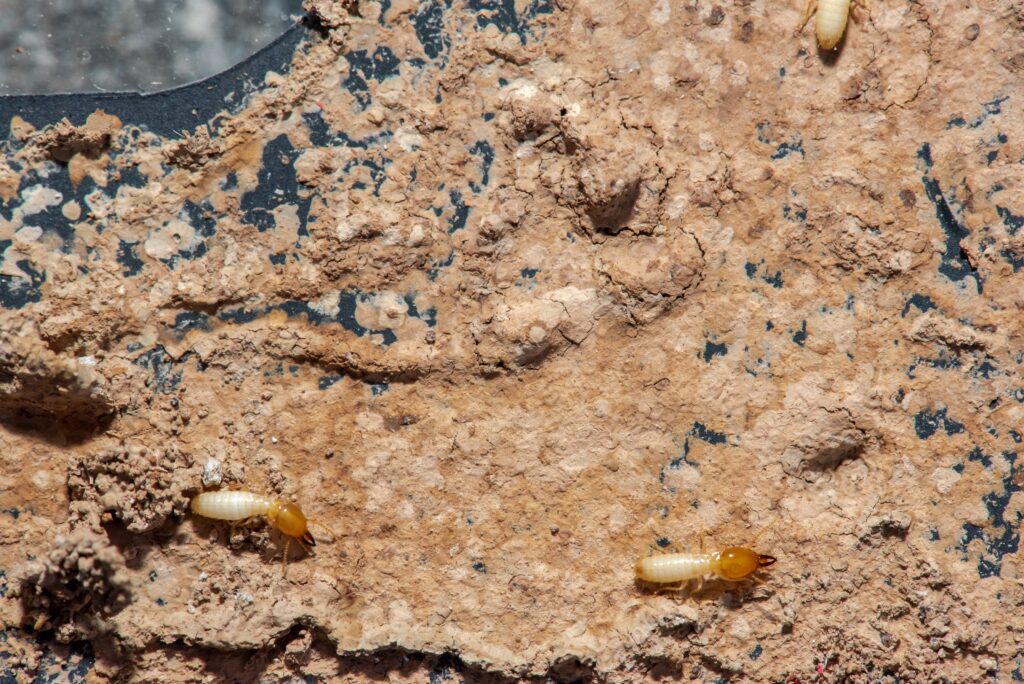
Finding live termites foraging within wood is a sure sign of an active infestation. When inspecting your garage, probe any wood that looks soft, blistered, or hollow. If you uncover small, pale insects moving through tunnels inside the wood, you can confirm that termites are present and feeding.
Damaged wood may feel ridged or flaky when you press on it, because subterranean termites consume the softer layers and leave thin strips of harder wood behind.
Where Termite Activity Shows Up Around Your Garage
Working tubes are constructed from the nest in the soil to wooden structures, and they may travel up concrete or stone foundations. In a garage, these mud tubes are among the most visible signs of a termite infestation. Check along the base of your garage walls where concrete meets wood framing.
Because garages often have slab-on-grade construction, the short distance between soil and structural wood gives termites a direct path upward. Look for pencil-width mud tubes running vertically on foundation walls or support posts.
Exterior Entry Points Termites Use Around Your Garage
Walk the perimeter of your garage and examine where the foundation meets the soil line. According to UC IPM, mud tubes may travel up concrete or stone foundations, making the exterior face of your garage foundation a key inspection area.
Any mud tubes on the outside of the concrete or stone indicate that termites have established a pathway between the ground and your garage’s wood components. Trees and landscaping beds near the foundation can attract termite colonies closer to the structure.
Why Termite Problems Develop in Your Garage
Garages often create conditions that termites need to thrive. Understanding what draws colonies toward your garage helps you spot vulnerabilities before damage to wooden structures begins.
Outdoor Nesting Areas for Subterranean Termites Near Your Garage
Subterranean termites are soft-bodied and require moisture to survive. According to Kansas State University Extension, colonies are typically located 1 to 30 feet below the soil surface, following chemical and moisture gradients to reach new food sources. Soil beds, mulch lines, and landscaping near your garage foundation can provide the damp ground colonies need to establish themselves close to your home.
Food and Shelter That Attract Termites to Your Garage
Termites damage wooden structures, and garages often store wood-based materials that serve as a food source. Worker termites damage wood by consuming the springwood layers, and they feed the other forms in the colony while expanding the nest. Moisture buildup inside a garage, from leaks or poor drainage, adds to the concern. Removing sources of moisture and repairing moisture damage can reduce the conditions that support nearby colonies.
How Subterranean Termites Move Through Your Garage
Mature colonies can range from several hundred to several million individuals. As worker termites forage outward from the colony, they follow chemical and moisture gradients through the soil toward wood they can reach. Native subterranean termite species begin swarming in January and most finish by early June, swarming in the morning or early afternoon. Termite swarmers can appear near garage walls or foundations during this window.
Trails and Entry Points Termites Use in Your Garage
Subterranean termites travel through soil and can enter a garage where concrete meets wood framing or where cracks in the slab allow passage. Minimizing termite access to your home means watching for these transition points. One early detection sign is the sudden appearance of winged termite swarmers near these areas.
Once an infestation takes hold, call a professional to address the problem. According to Kansas State University Extension, the average homeowner does not have the training, experience, or equipment needed to gain long-term control of a termite colony.
Health and Property Risks From Termites in Your Garage
Wood framing, stored lumber, and direct soil contact give subterranean termites a path from the ground into your home’s structure. Understanding the risks helps you recognize when a garage termite issue needs attention.
Structural Risks From a Termite Infestation in Your Garage
Subterranean termites live in the soil and forage into structures to access wood. As they feed, they can excavate galleries inside wooden components, sometimes leaving only a thin wooden exterior behind. According to the University of Georgia termite guide, this hollowed-out condition can weaken framing members that support walls, ceilings, and the connection between your garage and the rest of your home.
Only termite workers consume wood. Swarmers do not feed on wood, so the real structural threat comes from the worker caste feeding within your garage’s lumber over time.
Hidden Termite Damage in Your Garage Walls and Framing
Termite damage in a garage can be difficult to spot early. Workers build earth-hardened tubes using saliva mixed with soil and bits of wood or even drywall. These mud tubes let them travel between the soil and wooden components without exposure, keeping the activity out of sight behind walls or along foundation edges.
Because garages are often less finished than living spaces, wood may sit closer to or in direct contact with the soil. According to UC IPM, lumber in contact with the soil should be treated or naturally resistant to termites and decay to help protect against damage where concrete cannot be used.
Moisture and Secondary Pest Risks From Garage Termites
Garages collect moisture from vehicles, seasonal weather, and limited ventilation. Moisture can accelerate wood decay, and unlike termites, carpenter ants excavate decayed or water-damaged wood to build nests. In large colonies, these excavations can form an extensive network of galleries and tunnels. Both pests can target the same vulnerable garage wood, and addressing the moisture concern is essential for getting rid of both over time.
Wood stored directly on a garage floor remains at risk because of its soil contact, reinforcing the need for treated or resistant lumber in those areas. Trees close to the garage foundation can also increase soil moisture and provide a direct route for termite colonies to travel toward the structure.
When a Termite Problem in Your Garage Needs Action
Mud tubes on foundation walls, hollow-sounding wood, or thin exterior shells over excavated galleries all point to active feeding. Because worker termites consume wood from the inside out, visible surface signs often mean the problem has been developing for some time.
Every home without preventative termite treatment can eventually face a termite infestation. Green Shield Pest Pros performs 600 termite inspections per year for builders, and brings the same inspection process to existing homes across Central Ohio. A professional inspection of your garage can clarify how far any termite damage extends and what steps make sense next.
Professional Pest Control for Garage Termite Infestations
If you notice signs of a termite infestation in your garage, hire a pest control company to address the problem. According to Oregon State University Solve Pest Problems, professional treatment is the recommended path for removing termites from your home. Garages often share a foundation with the rest of the structure, so addressing the problem early matters for the entire building.
How to Reduce Attractants for Termites in Your Garage
Keeping your garage less appealing to termites starts with limiting conditions that draw them in. Store firewood, lumber, and cardboard away from the garage’s foundation. Make sure gutters direct water away from the slab, and fix any leaks that allow moisture to pool near the structure. Reducing soil-to-wood contact along the garage perimeter can also help lower the concern of a termite infestation developing without detection.
Why Termite Control in Your Garage Starts With a Professional Inspection
A professional inspects the interior and exterior of the structure before any treatment begins. Green Shield Pest Pros inspects both inside and outside the home to identify activity or signs of activity. This step determines the scope of the infestation and guides the treatment approach for your specific garage built-in conditions.
What to Expect During Professional Termite Treatment in Your Garage
As the EPA notes, the most common technique for treating termite infestations is the soil-applied barrier treatment, and chemicals used for barrier treatments must be labeled for that purpose. For deeper foundation walls, most pest control companies inject the treatment along the foundation through a hollow rod, a method known as rodding. The result is a continuous barrier from footing to surface.
Bait stations offer another approach. Termite bait products used by pest control companies can eliminate a termite colony while using less material than other treatment methods. Green Shield Pest Pros uses the Sentricon inground baiting system, the only termite product awarded the EPA’s Green Chemistry Challenge award for superior environmentally responsible chemistry.
If active interior damage is found inside the garage, a foaming product or an above-ground station can be installed directly over the active area. This targeted treatment works alongside the inground stations to address the infestation from multiple points.
What to Expect From a Garage Termite Control Plan
Green Shield Pest Pros uses the Sentricon system around the home to treat eastern subterranean termites. The baiting system utilizes the termites’ own worker delivery system to share the bait within colonies. Ongoing protection is part of the plan because every unprotected house can eventually face termite activity.
The termite protection program is priced per linear foot. Green Shield Pest Pros uses a digital measurement program with satellite imagery to map out the linear footage of your home, then charges $6.75 per square foot for the baiting system installation. Monthly coverage runs $74 per month, which includes general pest control and ongoing annual termite renewal treatments. You also receive $100 off the initial pest service.
Bottom Line on Dealing With Garage Termites
Your garage can be vulnerable to termite activity, especially where wood contacts or sits close to soil. Keeping the area around your foundation dry and maintaining gutters and downspouts are practical steps you can take to reduce that concern.
Call a professional once you confirm an infestation — or before one develops. Green Shield Pest Pros offers termite inspections and installs the Sentricon inground baiting system to protect Central Ohio homes. Contact Green Shield Pest Pros to schedule an inspection and learn about termite protection plans starting at $74 per month.
Frequently Asked Questions About Termites in Your Garage
Should I Try to Treat a Garage Termite Infestation Myself?
Most homeowners do not have the training, experience, or equipment needed for long-term control. We recommend hiring a pest control company to address termite activity in your garage or anywhere else on your property.
What Should I Look for During a Termite Inspection in My Garage?
Check for mud tubes running along interior and exterior foundation walls. Also look for any wood that directly touches the soil, since that contact can invite termite activity over time. Hollow-sounding wood when tapped and the sudden appearance of termite swarmers near the garage are other signs worth investigating.
Does the Concrete Slab in My Garage Need Termite Treatment?
If your garage slab was poured against your home’s foundation, the soil beneath it next to the foundation may need to be treated as well. A professional can assess whether additional protection is necessary in that area and determine the right roof-to-foundation approach for your specific structure.
How Does Green Shield Pest Pros Protect Against Termites in Your Garage?
After inspecting the interior and exterior of your home, we install the Sentricon inground baiting system around the structure. If active interior damage is found, a foaming product or above-ground station can be placed directly over the affected area. Sentricon is the only termite product to receive the EPA’s Green Chemistry Challenge award.