
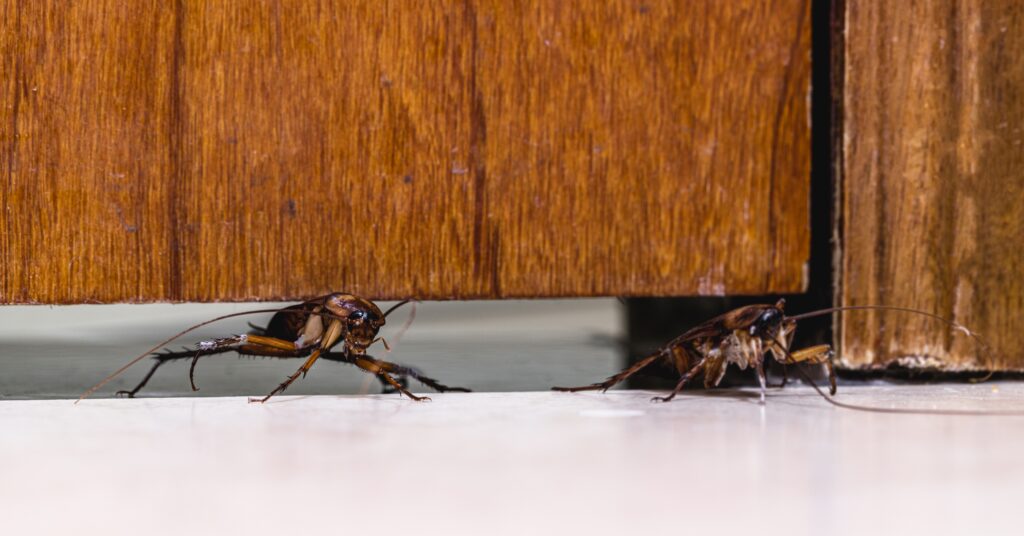
Bugs coming under the door can cause costly problems when early signs are missed. Learn the signs, risks, and when to call Green Shield Pest Pros.
Key Takeaways About Stopping Bugs From Coming Under the Door
- Gaps beneath doors and around windows are common entry points for insects, and addressing those openings is one of the most practical steps you can take to keep your home less inviting to pests.
- A combination of sealing cracks, maintaining screens, and adding weather stripping around doors and windows can help reduce the ways bugs get inside.
- DIY exclusion work has limits, and a professional inspection may uncover entry points that are easy to overlook on your own.
- Green Shield Pest Pros uses an Integrated Pest Management approach with lower-impact, pet-friendly treatments and plans starting at $49 per month with a free re-treatments guarantee.
How to Identify Bugs Coming Under the Door
Before you can address bugs entering under your door, you need to know what signs to look for and where to focus your attention. A quick visual inspection of your doorways and surrounding areas can reveal whether gaps, worn materials, or other conditions are giving insects easy access to your Powell home.
How to Tell Different Door Gap Types Apart
Not every gap under a door looks the same, and different types of openings can attract different kinds of pests. Some doors sit slightly above the threshold, leaving a visible strip of daylight along the bottom edge. Others may have older weather stripping that has compressed, cracked, or pulled away from the frame over time. Checking whether the gap is uniform or uneven helps you understand the scope of the issue before deciding on next steps.
How to Spot Bugs Coming Under the Door Inside Your Home
One of the clearest signs is finding insects near the base of your doors, especially in the morning or evening hours. You may notice small bugs clustered along the threshold, gathered on the floor just inside the entryway, or moving along nearby baseboards. Dead insects collecting in the same spot repeatedly can also indicate a consistent entry point rather than a one-time occurrence.
Where Door Entry Bug Activity Shows Up Around Powell Homes
Front doors and back doors that open to ground-level patios or porches tend to be common areas where gaps allow entry. Sliding doors and garage-to-house doors are also worth checking, since the seals on these entryways can wear down differently than standard hinged doors. Look closely at the bottom edge and both sides of the door frame for any visible daylight or warped material.
Exterior Entry Points Bugs Use to Get Under the Door
On the outside of your home, inspect the door sweep and the threshold plate for visible wear. If the sweep is bent, torn, or missing entirely, that gap becomes an open pathway. Pay attention to the condition of the frame where it meets the exterior wall as well. Even a small separation between the frame and the surrounding structure may be enough for insects to pass through. Noting these areas during your inspection gives you a clearer picture of what needs attention.
Why Bugs Keep Coming Under the Door in Powell Homes
Bugs do not appear under your door by accident. Conditions around and inside your home create the food, moisture, and access that draw pests indoors. Understanding what drives them helps you focus your prevention efforts in the right places.
Outdoor Nesting Areas That Push Bugs Toward Your Door
Many insects establish themselves just outside your home before finding a way in. Standing water in pots, buckets, and old tires can produce a generation of mosquitoes quickly, according to Kansas State University Extension. Carpenter ants may settle into existing voids in doors, window frames, and walls near your exterior. Crawl spaces can also harbor insects and other arthropods that later move indoors toward your living spaces.
Food and Shelter That Attract Bugs to Your Door and Entry Points
Food attracts and sustains many insect species, including stored food pests, cockroaches, and ants. Dirty floors and counters add to the draw. According to Kansas State University Extension, inspecting stored items for insects and damage before placing them in sealed plastic containers helps prevent infestations from becoming established.
Moisture plays a role too. Fixing water leaks removes moisture sources that cockroaches and other pests depend on. Without food, some pests like spiders will move on to a new location, so reducing food sources inside your home can decrease activity over time.
How Bugs Move Through Homes After Getting Under the Door
Cockroaches can travel from neighboring apartments and rooms through holes and cracks. Outdoor lighting can also pull insects toward doors and windows at night. Once bugs reach the structure, gaps beneath doors and worn weather stripping give them a direct path inside and onward through your home.
Cracks and Entry Points Bugs Use Beyond the Door
Cracks in foundations, holes in screens, and gaps around walls or doors all serve as access routes. As Kansas State University Extension notes, repairing screens, installing weather stripping around doors and windows, and caulking foundation cracks are important first steps. Crevices around sinks, plumbing, and kitchen splash guards can also let pests move deeper into your living space once they get past the door.
Caulking and sealing as many of these cracks and crevices as possible reduces the places where bugs can travel and hide throughout your home.
Risks of Leaving Door Gaps Unsealed in Your Powell Home
Health Risks From Bugs Coming Under the Door
Gaps beneath doors give pests a direct path into your living space. When you attempt to seal cracks and entryways, it is important to keep adequate ventilation in your home for health and safety reasons. Blocking every opening without considering airflow can create indoor air quality concerns that affect your household.
Doors, windows, and walls that do not fit tightly let pests move freely between outdoor and indoor environments, increasing the chance of repeated encounters in rooms where your family spends the most time.
Property Damage From Bugs Entering Through Door Gaps
Pests that enter through unsealed doors can cause real harm to your home over time. According to Oregon State University Solve Pest Problems, termites cause significant damage to wooden structures, sometimes requiring removal of affected components and full replacement of damaged wood. A gap under an exterior door is one more entry point that may go unnoticed until the damage is already done.
Cracks around door frames, utility penetrations, siding, and wood fascia are all potential pathways. When these openings remain unsealed, pests can access structural materials throughout the home. Addressing door gaps alone may not be enough if surrounding areas also have openings.
Kitchen and Food Area Risks From Bugs Coming Under the Door
Pests that travel under doors often move toward kitchens and pantries. Tight-fitting doors, sealed walls, and properly caulked window frames help exclude pests from food preparation areas. Without those barriers, pests may move between rooms with little resistance.
Adding door sweeps and weather stripping to sliding glass doors and windows near food areas can reduce the number of entry points pests use to reach these spaces. Repairing holes in screens and caulking openings in window frames are additional steps that help keep pests out of the areas where you store and prepare meals.
When to Look More Closely at Bugs Coming Under Your Door
If you notice pests inside your home despite basic sealing work, the gap under your door may not be the only issue. Openings around crawl space entries, windows, utility penetrations, and wood fascia can all serve as alternate routes. Quality silicone or silicone-latex caulk is appropriate for many of these openings, and weather stripping may be needed around doors and windows to provide tighter seals.
Persistent pest activity after sealing visible gaps suggests that additional entry points need attention. A thorough check of your home’s exterior, including door frames and surrounding materials, can help you identify where pests are still getting through.
Professional Pest Control to Stop Bugs From Coming Under the Door in Powell
Keeping bugs from slipping under your door takes more than a quick fix. A lasting approach combines reducing what draws pests to your entry points, thorough inspection, and professional-grade exclusion work.
How to Reduce Attractants That Draw Bugs Toward Your Door
Bugs follow the path of least resistance into your home. According to Mississippi State University Extension, making a house as bug-tight as possible starts with installing door seals, door sweeps, and weather stripping, along with caulking holes and cracks through which insects might enter. These steps reduce the easy access that draws pests toward your doors in the first place.
Screens also play a role beyond doors. Keep screens on windows and over vents in soffits, gables, and crawl spaces. Window unit air conditioners can be a common entry point as well, so removing them when they are not in use can help close off another route bugs use to get inside your Powell home.
Why Stopping Bugs at the Door Starts With a Professional Inspection
A thorough inspection reveals gaps you may not notice on your own. One helpful test: if you can see light from the outside while standing inside, that gap is wide enough for ants and other pests to pass through. Worn thresholds and weather stripping should be replaced as needed to close those openings.
A professional inspection goes further, covering thresholds, door sweeps, door and window seals, and structural cracks. Screened vents behind crawl spaces, soffits, and attics are checked as well, along with chimney caps where appropriate. This level of detail helps identify every potential entry point around your home.
What to Expect During Professional Door Bug Exclusion Treatment
Green Shield Pest Pros service professionals look at the full perimeter of your home, not just the front door. Sweeps on door bottoms, metal spring strips, and weather stripping around door jambs are all part of a proper exclusion strategy. Door and window frames, room corners and edges, and other suspected entry points all receive attention.
Green Shield Pest Pros offers lower-impact, pet-friendly treatments that align with their Integrated Pest Management philosophy, serving Powell and surrounding Central Ohio communities.
What to Expect From an Ongoing Bug Exclusion Control Plan
A control plan from Green Shield Pest Pros addresses both current gaps and ongoing maintenance. Door sweeps and weather stripping around doors and windows help block ways for pests to enter. Screens on windows and vents are repaired or installed as part of the exclusion process.
With recurring plans starting at $49 per month and a free re-treatments guarantee, your home stays protected as conditions change with the seasons. The goal is to keep your home as bug-tight as possible by maintaining seals, sweeps, and screens over time rather than reacting after pests have already moved in.
Bottom Line on Stopping Bugs From Coming Under the Door
Keeping bugs from slipping under your door comes down to closing the gaps they use to get inside. A combination of door sweeps, weather stripping, and sealing nearby cracks gives your Powell home a stronger barrier against entry.
These steps work best as part of ongoing maintenance rather than a one-time fix, because wear, shifting frames, and seasonal changes can reopen gaps over time. When DIY prevention is not enough to keep pests out, Green Shield Pest Pros can help with an inspection and a plan tailored to your home. Contact us to get started with plans beginning at $49 per month.
Frequently Asked Questions
Do Door Sweeps Really Help Keep Bugs Out?
Door sweeps close the gap between the bottom of the door and the threshold, which is one of the most common ways bugs enter a Powell home. A properly fitted sweep can make a noticeable difference, though it works best alongside weather stripping and sealed cracks nearby.
How Often Should I Replace Weather Stripping Around My Doors?
Weather stripping wears down over time from regular use, temperature shifts, and exposure to moisture. Check it at least once or twice a year. If you notice visible gaps, tears, or compression that keeps the material from springing back, it is time for a replacement.
Can Bugs Still Get In Even After I Seal the Door?
Yes. Bugs may also enter through cracks in walls, gaps around windows, vents, and utility openings. Sealing the door is an important step, but it is most helpful as part of a broader approach that addresses other potential entry points around your home.
When Should I Call a Pest Control Professional About Door Bugs?
If you are still seeing bugs inside after sealing doors and addressing other gaps, a professional inspection can help identify entry points or conditions you may have missed. A trained service professional can also recommend targeted steps based on the specific pests involved in your Powell home.