
Termites can cause costly damage when early signs are missed. Learn how termites spread, the signs to watch for, and when to call Green Shield Pest Pros.
Key Takeaways About How Termites Spread
- Termites can move through soil toward a house to reach wood, and spotting mud tubes or damaged wood early helps you catch activity before it progresses.
- Moisture problems around your home can create conditions that support termite activity, so addressing those vulnerabilities is a practical first step in prevention.
- Regular inspections give you and a pest control professional the chance to identify risk factors and catch signs of termites sooner.
- Licensed professionals handle treatment applications, and Green Shield Pest Pros uses the Sentricon inground baiting system to target eastern subterranean termite colonies around your home.
How Termites Spread and How to Identify the Signs
Understanding how termites spread starts with recognizing the signs they leave behind. Eastern subterranean termites are the species Green Shield Pest Pros treats across Central Ohio, and catching their activity early depends on knowing what to look for, both in the insects themselves and in the damage they cause.
How to Tell Termite Species Apart When They Spread
Swarmers are often the first visible clue that a colony is spreading. According to the University of Georgia termite guide, eastern subterranean termite swarmers range from black to caramel in color and measure roughly 1/4 to 3/8 inch in body length. Finding a cluster of these winged insects near windows or light fixtures can indicate that a mature colony is nearby and producing new reproductive members.
Because several wood-destroying insects can look similar at first glance, size and coloring are helpful starting points. Subterranean swarmers tend to be smaller than many ant species and have straight, bead-like antennae rather than elbowed ones.
Signs of Termites Spreading Inside Your Home
Inside your home, wood damage is often the clearest indicator. Subterranean termites create a distinctive pattern of damage in wood that, as UC IPM notes, can often be used on its own to distinguish their activity from that of other species. If you notice wood that sounds hollow when tapped, or surfaces that appear blistered or warped, it is worth investigating further.
Discarded swarmer wings on windowsills, near doors, or along baseboards are another indoor sign of termites spreading. These wings break off after swarmers land, leaving small translucent clusters behind that are easy to spot during a walkthrough.
Where Termite Spread Activity Shows Up Around Homes
Around the exterior of your home, look for mud tubes running along foundation walls, concrete piers, or other hard surfaces. These narrow tubes are how subterranean termites travel between the ground and the wood they feed on, and spotting them is one of the clearest signs of termites spreading toward your structure.
Woodpiles, mulch beds close to the foundation, and any area where wood contacts soil can attract activity. Checking these zones on a seasonal schedule helps you notice changes before termite damage progresses.
How Termites Spread Through Exterior Entry Points
Subterranean termites typically reach your home from below. Foundation cracks, gaps around utility penetrations, and expansion joints in concrete can all serve as pathways. Even very small cracks and gaps may be enough for worker termites to pass through and build mud tubes toward wood above.
Green Shield Pest Pros inspects both the interior and exterior of your home during a termite inspection, looking for these entry points and any signs of current or past activity. If signs of termites are found, the Sentricon inground baiting system is installed around your home to address the colony using the termites’ own foraging behavior.
Why Termite Spread Problems Develop Around Ohio Homes
Termite colonies grow underground and inside wood, often going unnoticed until damage is already underway. Understanding how termites spread starts with knowing where they nest, what draws them in, and how they reach your home’s structure.
Outdoor Nesting Areas Where Termite Colonies Build
Subterranean termites live in the soil and forage outward from their colonies to reach wood. According to the University of Georgia termite guide, termite colonies at maturity can range from several hundred to several million individuals. That underground starting point means the ground around your home is the primary habitat where colonies establish and grow before workers begin seeking food sources at a neighboring house or structure.
Drywood termites take a different approach. They require no soil contact, obtaining all the moisture they need from wood itself and metabolic processes. This means they can nest directly inside wooden components and spread without any connection to the ground.
Food and Shelter That Attract Spreading Termite Colonies
Wood is the primary food source that drives termite spread. Termites damage wooden structures, and moisture problems can make that wood more accessible. Removing moisture sources and repairing moisture-damaged wood around your home helps minimize the conditions that support foraging colonies looking to spread to new areas.
How Termites Travel and Move Through Homes
Swarming is the primary way termite colonies spread to new locations. Native subterranean termite species typically begin swarming as early as January and are mostly finished by early June. These swarms happen in the morning or early afternoon, and the swarmers are not attracted to lights.
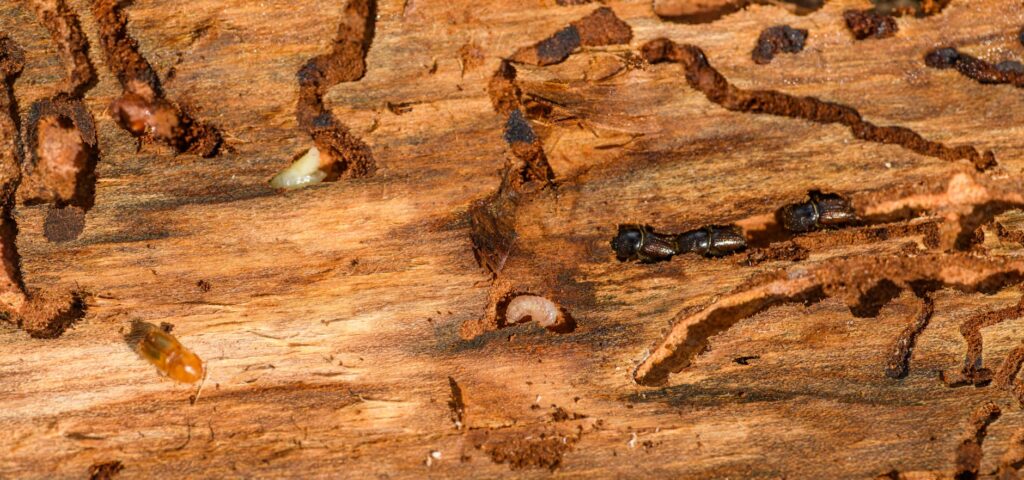
Once workers from new colonies locate a food source, they excavate galleries through wood as they consume it, sometimes leaving only a thin exterior shell. This hidden feeding is why termite spread often goes undetected for extended periods, and why regular inspections matter.
How Termites Build Mud Tubes to Spread Into Structures
Subterranean termites forage from the soil into structures through protected pathways. To build mud tubes and travel between the ground and wood above, they use any point where wood contacts or sits close to soil as an entry route. Because worker termites share resources within their colonies, a single entry point can support ongoing spread as foraging trails expand through a structure over time.
Risks of Termite Spread in Ohio Homes
Understanding how termites spread also means understanding the risks they carry. As colonies expand and workers reach new areas of a structure, the potential for serious structural concerns grows. Here is what homeowners should keep in mind.
Structural Risks From Termite Spread
Termites consume wood and other cellulose material, causing extensive damage to structural parts of a building. According to Oregon State University Solve Pest Problems, termites can cause significant structural damage, sometimes requiring full removal and replacement of affected components. Because workers feed continuously as colonies spread, the longer an infestation goes undetected the more wood they consume.
Hidden Termite Damage as Colonies Spread
One of the greatest risks is that termite activity often stays hidden for a long time. As the University of Tennessee Extension notes, their presence may not be discovered until they swarm, sometimes years after first infesting a structure. During that time, workers can hollow out wood from the inside while the exterior surface appears untouched.
Mud tubes are one visible clue that termites have spread into a structure. Workers build these tubes using saliva mixed with soil and bits of wood or drywall. Spotting these tubes along a foundation or interior wall indicates an active pathway between the colony and a food source.
Belongings and Moisture Risks From Termite Spread
Termites feed on wood and other cellulose material, which means items beyond framing lumber can be at risk as colonies spread. Any cellulose-based material in the path of an expanding colony may be consumed over time. Moisture conditions that attract termites also contribute to ongoing wood deterioration, compounding the overall concern for your home.
When Termite Spread Needs Immediate Action
Because termites can remain hidden for years as they spread, waiting for obvious signs often means damage has already accumulated. Every home without preventative termite treatment may eventually face termite activity as new colonies form in surrounding soil.
If you notice mud tubes, discarded wings, or wood that sounds hollow when tapped, those are signs of termites that warrant professional evaluation before further spread occurs. Green Shield Pest Pros performs 600 termite inspections per year for builders alone, reflecting how routine professional evaluation has become for protecting Ohio homes.
Professional Pest Control to Stop Termite Spread
Understanding how termites spread is only part of protecting your home. Because subterranean termites build working tubes from their colony in the soil to wooden structures, and those tubes can travel up concrete or stone foundations, an active infestation can go unnoticed for a long time. A pest control approach that pairs prevention with professional termite treatment addresses the ways colonies reach your home.
How to Reduce Attractants That Help Termites Spread
Homeowners can correct conditions conducive to termite spread on their own. Reducing wood-to-soil contact near your foundation limits the pathways termites use to build mud tubes and reach your structure. Replacing termite-damaged wood as soon as you find it also removes a resource that sustains continued activity.
These adjustments do not replace professional termite treatment, but they make your property less inviting to foraging colonies and reduce the conditions that allow termite spread to go unnoticed.
Why Regular Inspections Are the Starting Point for Termite Control
Finding live termites foraging within wood is a sure sign of an active infestation. That is why a detailed inspection of both the interior and exterior of your home is the starting point for any termite treatment plan. Green Shield Pest Pros performs 600 termite inspections per year for builders across Central Ohio, so our team knows where to look and what to look for.
Mud tubes running up foundations are a key indicator that termites have spread from the soil into the structure. According to UC IPM, applications of registered treatments are highly regulated and require a licensed pest control professional to carry out the inspection and control program.
What to Expect During Professional Termite Treatment to Stop the Spread
According to Oregon State University Solve Pest Problems, pest control companies treat your foundation and nearby soil with targeted products, or use bait to address termite colonies. Green Shield Pest Pros uses the Sentricon inground baiting system, which is the only termite product awarded the EPA’s Green Chemistry Challenge award for superior environmentally responsible chemistry.
If interior damage is active, a foaming product or an above-ground station can be installed directly over the affected area. This layered approach addresses both the termite infestation inside the structure and the colony pathways in the surrounding soil.
What to Expect From a Termite Control Plan With Green Shield
Green Shield Pest Pros uses Sentricon bait stations around your home to target eastern subterranean termite colonies through their own worker delivery system. The termite protection program is priced per linear foot, then billed at $74 per month, which covers general pest control and ongoing annual termite renewal treatments. The initial baiting system installation is $6.75 per square foot, and new customers receive $100 off their initial pest service.
A proactive plan with regular inspections addresses how termites spread before mud tubes reach your structure, giving you ongoing oversight of your home’s foundation and perimeter.
Bottom Line on How Termites Spread
Termites spread by foraging through soil into structures, and mature colonies produce swarmers that establish new populations in neighboring houses and nearby structures. Because they work hidden inside wood, damage can build over time before warning signs appear. Reducing moisture and addressing wood-to-soil contact lowers the risk, but a professional baiting system offers the most reliable ongoing protection. Green Shield Pest Pros installs the Sentricon inground baiting system and offers termite protection plans starting at $74 per month. Reach out to schedule an inspection if you want to get ahead of the problem.
Frequently Asked Questions
Can Termites Spread From One House to a Neighbor’s House?
Termites forage through soil and can travel from one structure to a neighboring one if conditions allow. Swarmers from a mature colony may also land near a different home and attempt to start new colonies, so proximity to an active infestation in a neighbor’s house is worth monitoring with regular inspections.
What Are the First Signs That Termites Have Spread to Your Home?
Mud tubes along foundation walls or interior surfaces are a common early indicator. You may also find wood that sounds hollow when tapped or feels soft and channeled when probed. Winged swarmers appearing indoors can signal an established colony nearby that has begun to spread.
Does Fixing Moisture Problems Help Stop Termite Spread?
Yes. Removing sources of moisture and repairing water-damaged wood makes your home less attractive to termites that depend on damp conditions. Correcting these issues is an important step alongside professional termite treatment.
Why Is Professional Treatment Recommended to Stop Termites From Spreading?
While homeowners can correct conditions that attract termites, applying treatment products requires a licensed professional. Green Shield Pest Pros uses the Sentricon system, which works through the colony’s own worker delivery system to target the entire termite population from the ground up and prevent further spread.